What «official» actually means when you log in
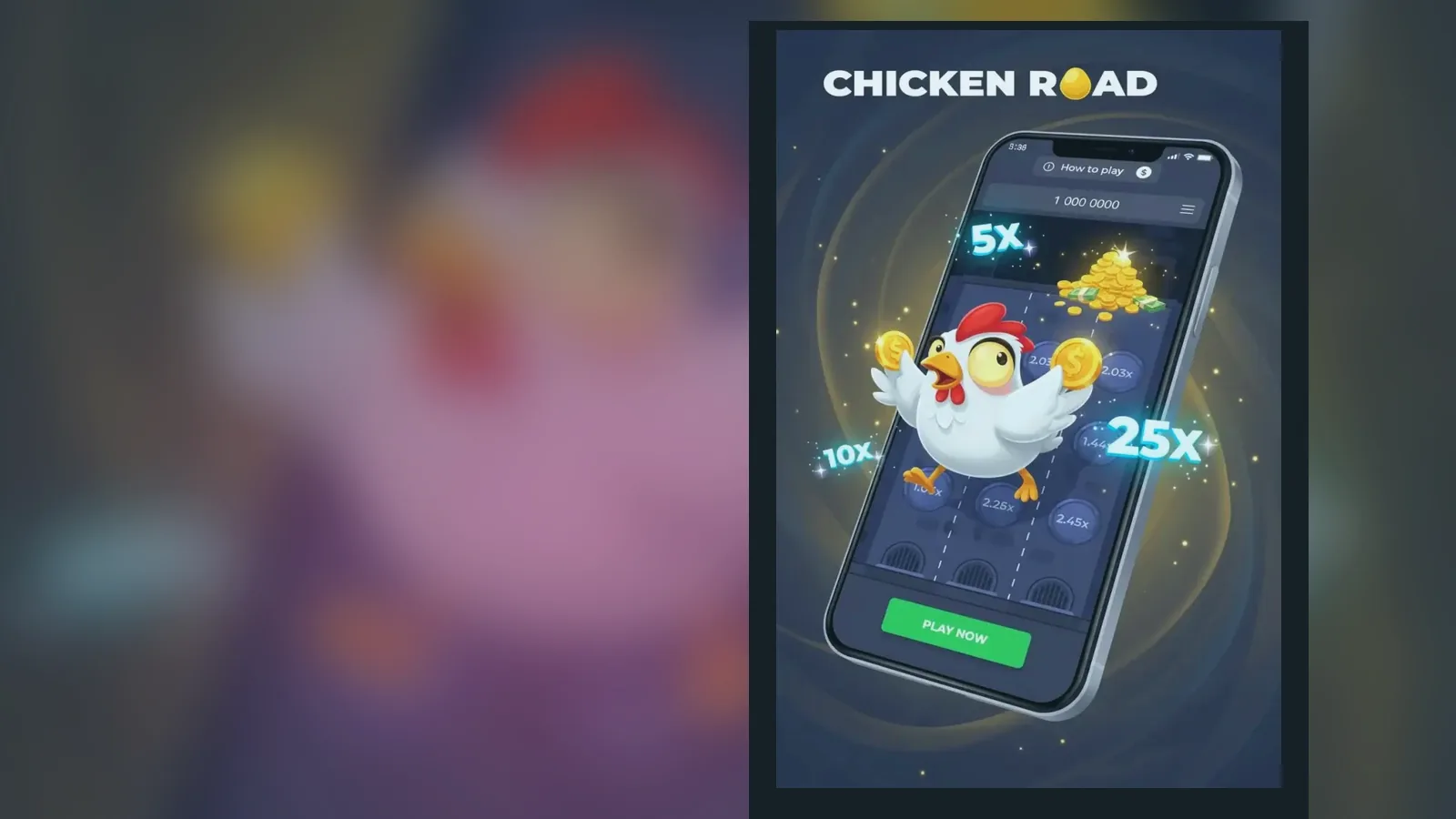
A mate rang me last week: he'd found three different Chicken Road 2 sites, each claiming to be «the official one». He'd already created an account on the first before wondering which was real. The short answer: none of them is the official site, because no such thing exists for this game.
What matters is whether the operator holding the game has a valid UKGC remote licence. The game itself comes from a studio; the casino runs it under their own brand. Your login sits with the operator, not the game. Here's how to check you're on solid ground, what a UKGC account requires, why there's no official app, and what to do when things go sideways.
Provider, operator, licence—three separate pieces
Chicken Road 2 is built by a studio that supplies the maths, graphics, and RNG certificate. That studio then licenses the game to multiple casino operators across the UK. Each operator runs the same core build but wraps it in their own branding, welcome offer, and payment stack.
The UKGC doesn't licence individual games; it licences the operator. The operator's remote gambling licence covers every title they host, provided the game's RNG has passed independent lab testing. So when you see «official Chicken Road 2 site», what you're really looking at is one operator among many that holds a legal right to offer it.
- The studio owns the game code and certifies the RNG.
- The operator holds the UKGC licence and your account.
- The regulator checks the operator's financial standing, responsible-gambling controls, and segregated player funds.
This is why three different domains can all serve the real game: they're three licensed operators, each paying the studio for distribution rights. None of them is «more official» than the others—what counts is the licence number in the footer.
How to verify a licence in under a minute
Every UKGC-licensed site must display its licence number at the bottom of every page. The public register at gamblingcommission.gov.uk lets you cross-check that number and see the operator's legal name, trading names, and licence status. Here's the walkthrough:
- Scroll to the footer of the casino site and find the UKGC licence number—it looks like 000-000000-R-000000-001.
- Open the Gambling Commission's public register in a new tab.
- Paste or type the licence number into the search box.
- Hit search; the result should show the operator's full legal entity and confirm the licence is active.
- Check that the trading name on the result matches the brand you're on—some groups run multiple casinos under one licence.
- If the register shows «suspended», «revoked», or no result at all, close the tab and walk away.
This process takes forty seconds once you know where to look. If a site has no licence number in the footer, or the number doesn't match the register, it's unlicensed and illegal to operate in the UK. Your deposits aren't protected, and you have no recourse if the operator vanishes.
What the account and login flow involve
Because UKGC rules mandate age and identity verification before deposit, your first visit will ask for more information than a typical app sign-up. You'll supply your full name, date of birth, address, and often the last four digits of your bank account or a recent utility bill. The operator cross-checks this against credit-reference databases to confirm you're over eighteen and you are who you claim.
Once verified, your login is straightforward: email and password, sometimes with two-factor authentication via SMS. The operator tracks your net deposits across the month; from £150, a credit-reference affordability check kicks in automatically. If you hit that threshold and the data raises questions, you may be asked for payslips or bank statements before you can deposit further.
Your first withdrawal takes the longest—usually 24 to 48 hours—while the compliance team reviews your documents. After that, e-wallet payouts clear in a few hours, and Faster Payments reach your bank account within a working day or two. All payment methods must be in your own name; third-party deposits and withdrawals are rejected.
The official app question (and why the answer is usually «no»)
There is no standalone Chicken Road 2 app in the App Store or on Google Play. Crash games of this type run in the browser, either desktop or mobile, wrapped inside the operator's own casino platform. A few operators do offer native apps that bundle all their games—slots, live casino, and crash titles—but the game itself loads in a WebView or instant-play frame.
If you see an APK download link for «Chicken Road 2 official app», it's either a rebadged demo that can't handle real money or outright malware. Google Play and the App Store both allow real-money gambling apps from UKGC-licensed operators, but those apps are published by the casino brand, not the game studio. You'll recognise the operator's name, logo, and—crucially—their licence number inside the app's terms.
When something goes wrong—complaint path and regulator escalation
Disputes happen: a withdrawal takes too long, a bet result looks off, affordability checks feel intrusive. UKGC licence conditions require every operator to publish a complaints procedure and respond within a set timeframe. Start there.
- Email the operator's support team with your account details and a clear description of the issue. Most sites have a dedicated complaints email address in the footer or help section.
- The operator must acknowledge your complaint within two working days and investigate within eight weeks.
- If you're not satisfied with the outcome, or eight weeks pass without resolution, escalate to an independent Alternative Dispute Resolution (ADR) service. The operator's terms will name the ADR provider they use—usually eCOGRA or IBAS.
- If the ADR ruling still doesn't resolve it, or if you believe the operator breached their licence conditions, file a formal complaint with the Gambling Commission. They won't adjudicate individual disputes but will investigate systemic failings.
For self-exclusion across every UKGC site, register with GAMSTOP. One sign-up blocks you for six months, one year, or five years—your choice. It's immediate and irreversible within the chosen period. If gambling is causing harm, BeGambleAware offers free support and counselling.
Red flags that mark a clone or unlicensed copy
Clones mimic the look of the real game but run on rigged or untested RNG. Some are outright scams that take deposits and never pay out. Here's what to watch for:
- No UKGC licence number anywhere on the site, or a number that returns no result in the public register.
- The site accepts credit cards for deposits—banned in the UK since April 2020.
- No mention of GAMSTOP, affordability checks, or stake caps by age.
- Currency shown in dollars, euros, or crypto when you selected UK as your location.
- Withdrawal terms that waive KYC or promise instant cashouts with no ID check.
- Bonus offers with no wagering requirement listed, or wagering listed as 1× or 0×—impossible under UKGC rules.
- Domain registered in a jurisdiction with no gambling regulation, like Curaçao or Costa Rica, serving UK players without a remote licence.
If a site ticks two or more of these boxes, it's not a grey area—it's illegal to operate in the UK, and your money isn't protected by segregated accounts or the regulator's oversight.
What official status does not guarantee
A valid UKGC licence tells you the operator is solvent, the RNG is certified, and your funds sit in a segregated account. It does not guarantee you'll win, nor does it mean the game is «due» after a losing streak. The house edge is baked into the maths; over enough rounds, the operator makes a profit. That's not rigged—it's how probability works.
Official status also doesn't protect you from your own decisions. Stake caps of £5.00 per spin—or £2.00 if you're aged eighteen to twenty-four—limit single-bet exposure, but they don't prevent you from chasing losses across multiple spins. Affordability checks from £150 a month are there to flag risk, not to manage your budget for you.
| What a UKGC licence covers | What it doesn't |
|---|---|
| Certified RNG and fair game maths | A guarantee you'll win or break even |
| Segregated player funds in case the operator fails | Protection from your own poor bankroll decisions |
| Formal complaint route and ADR access | Instant resolution of every dispute in your favour |
| Stake caps and affordability checks | A cap on total monthly spend unless you self-exclude |
The operator's terms list the wagering requirement for any bonus, the withdrawal processing times, and the documents needed for KYC. Read them before you deposit, because «official» doesn't mean «no strings attached». Offers change; if a site advertises a welcome package, check the current terms on the cashier page rather than relying on what you saw last month.
FAQ
Can I play Chicken Road 2 at more than one UKGC-licensed casino with the same login?
No. Each operator runs its own account system; your login at one site won't work at another, even if both host the same game. If you want to compare offers, you'll need separate accounts and separate KYC checks at each.
What happens if the operator loses or surrenders its UKGC licence while I have a balance?
Player funds must be held in a segregated account, separate from the operator's business money. If the licence is revoked or the company enters administration, the UKGC oversees return of those funds to players. Processing takes time, but your balance is protected by licence conditions.
Is there a demo or free-play version I can try before depositing?
Many UKGC sites offer demo play, but free-play modes are often restricted to logged-in, age-verified accounts because of advertising rules. You won't risk real money, but you will need to pass the initial age check to access it.
Why does my first withdrawal take two days when the site says «instant payouts»?
The first withdrawal triggers document review—passport, proof of address, sometimes proof of payment method. Until compliance signs off, the payout is on hold. After that, e-wallet withdrawals clear in hours and Faster Payments in one to two working days, which is as close to instant as UK banking allows.